1The problem
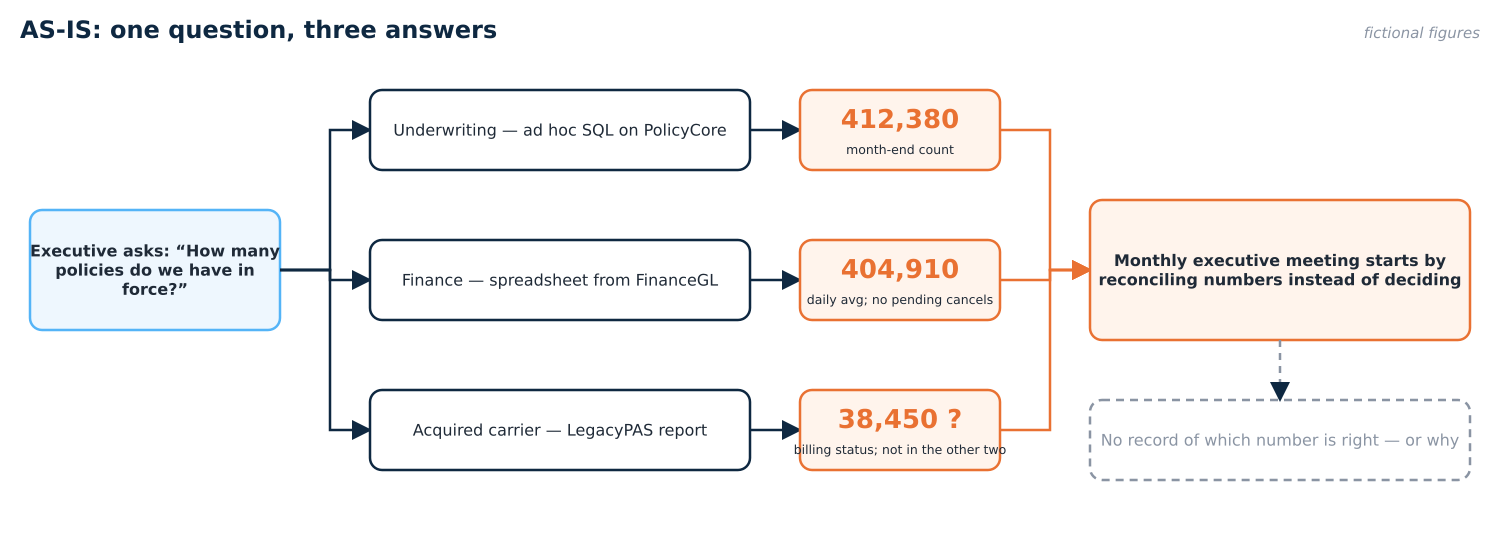
After acquiring a smaller carrier, Lone Star Mutual has two policy systems, open access to data, and analysts writing their own SQL. Every monthly executive meeting starts the same way: Underwriting, Finance and the acquired team each bring a different number for the same metric, and the first half hour goes to deciding whose is right.
2The decision rule
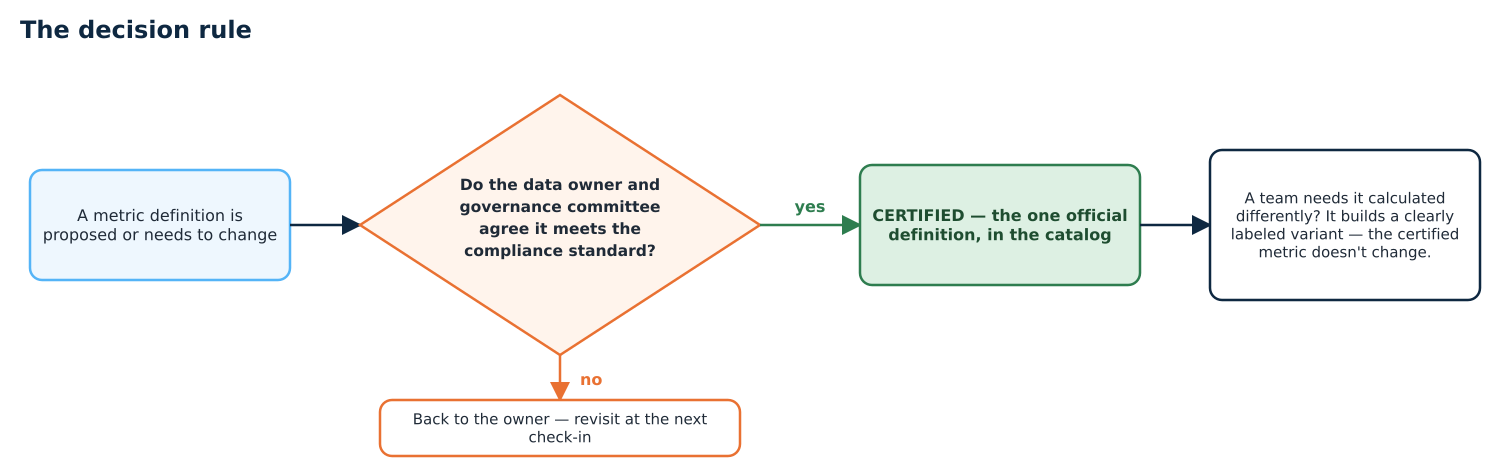
Leadership doesn’t want to restrict access — it keeps the business fast. So the answer isn’t locking data down; it’s certifying the answers. The data owner and the governance committee set the standard, anchored to the compliance requirement. When they agree, that becomes the certified definition. A team with a legitimate different need keeps it as a labeled variant.
Why three loss ratios can all be right
| Version (fictional quarter, $50M earned premium) | Result | Label |
|---|---|---|
| Paid losses ÷ earned premium | 52.0% | Variant — Claims (cash view) |
| Incurred losses ÷ earned premium | 61.0% | Certified — Actuarial, statutory basis |
| (Incurred losses + LAE) ÷ earned premium | 71.0% | Variant — Finance (includes claim-handling cost) |
3The future state
| Need | Before | After |
|---|---|---|
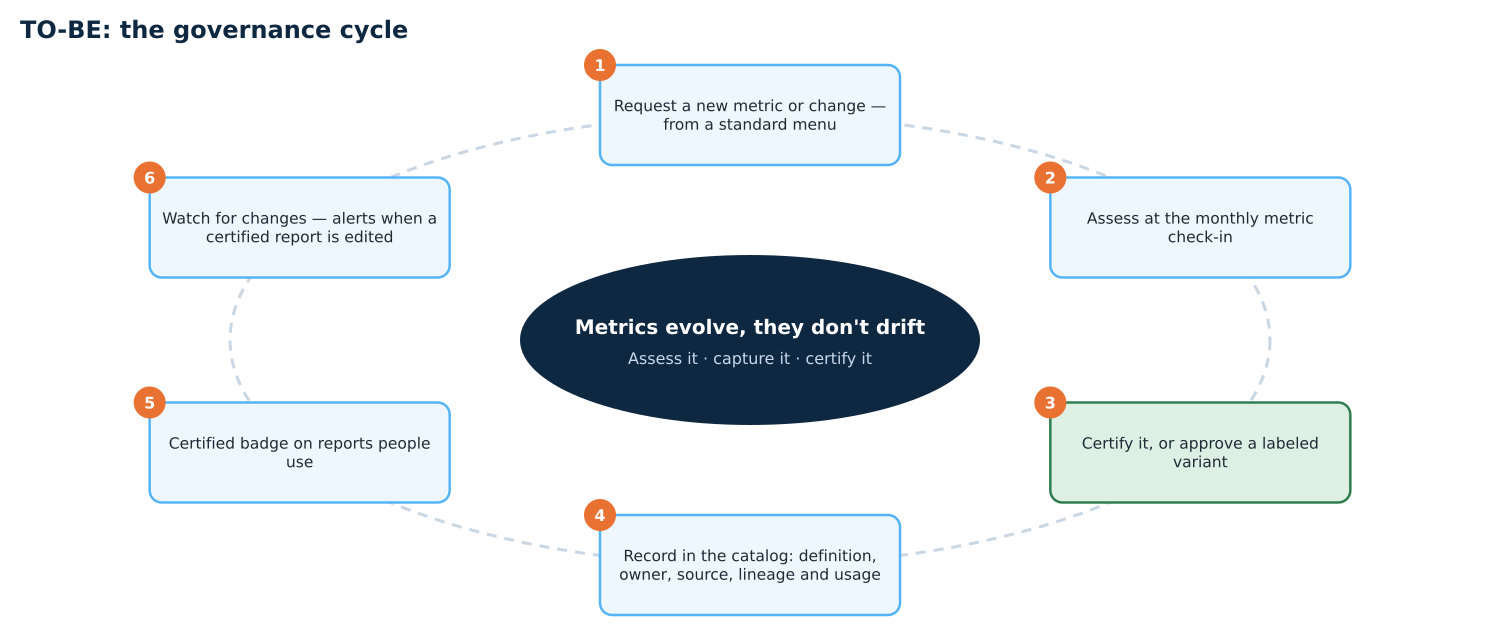
| Which number is right | Argued in the meeting | The certified definition, by rule |
| Ownership | Unclear after the acquisition | Named owner and steward per metric |
| Different team needs | Competing numbers | Labeled variants |
| Changes | Discovered at audit time | Requested, assessed monthly, logged |
| Access | Open | Still open — the outputs are certified instead |
4The artifact: a working metric catalog
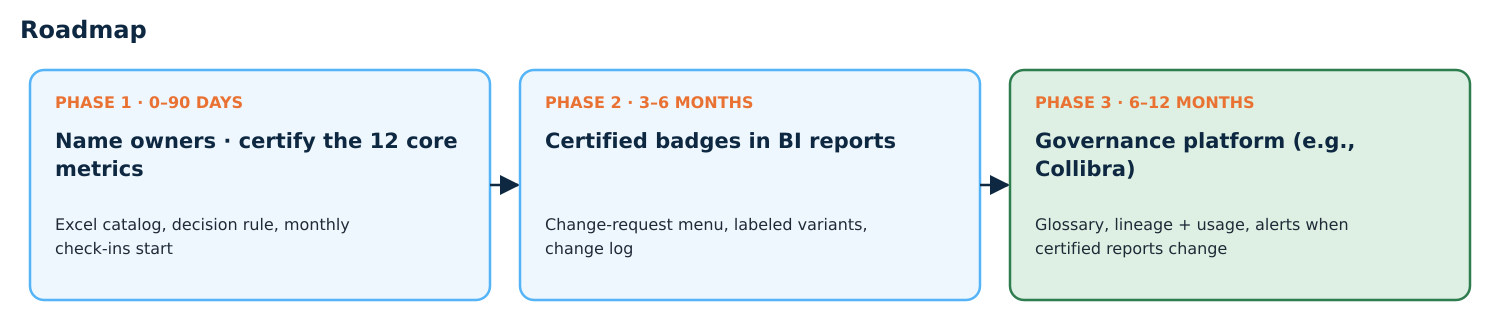
The core deliverable is an Excel workbook. For each of 12 insurance metrics it records the business question, certified definition, formula, owner, steward, source systems, refresh, compliance anchor, approved variants, status and next check-in. A live scorecard counts certified metrics and flags the next check-in automatically.
| Workbook tab | What it shows |
|---|---|
| Metric Catalog | 12 metrics, one certified definition each, variants listed separately |
| Three Versions of Truth | How each team defined policies in force, retention and loss ratio — and how each was resolved |
| Loss Ratio Example | Live formulas: paid, incurred and loss-and-LAE ratios from the same inputs |
| Ownership (RACI) | Who is responsible, accountable, consulted and informed |
| Change Log | Requests, reasons, decisions and effective dates |
| Scorecard & Glossary | Live governance measures and plain-language terms |
5What I learned
Lone Star Mutual, its people, systems and figures are fictional.
Downloads
The full case study includes requirements, stakeholder analysis and trade-offs.